Best SMS API for AI Agent Workflows: What to Look For
AI agents need more than a way to send a message. If an agent is going to support customer communication, it needs to understand what happens after the SMS is sent. Did the message deliver? Did it fail? Did the customer reply? Should the agent classify the reply, trigger a next step or hand the conversation to a person?
That is why the best SMS API for AI agent workflows is not just the provider with a send endpoint. It is the platform that can support the full customer messaging loop.
What is an AI agent SMS workflow?
An AI agent SMS workflow uses an SMS API to send, receive, track and respond to customer messages as part of an automated process.
The agent may decide when a message should be sent, choose the right approved template, pass the request to the SMS API, read the delivery result, classify a customer reply and trigger the next action. That could mean updating a CRM, escalating a support case, sending a follow-up or suppressing future messages after an opt-out.
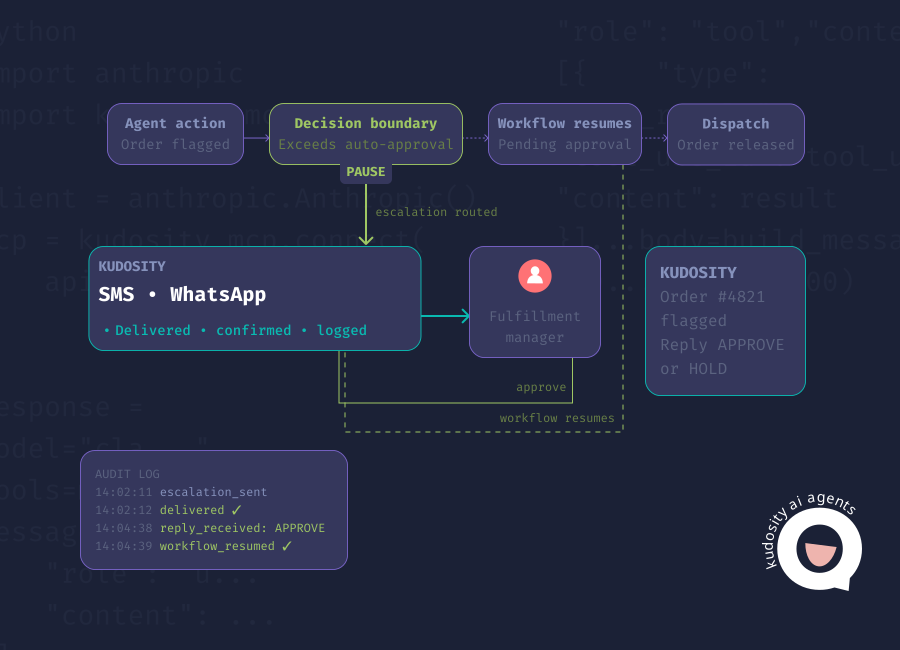
The important part is control. AI agents should only act through approved tools, with defined permissions, logging and human handoff where needed.
How AI agent SMS workflows work
A practical workflow looks like this:

AI agent
SMS API
Customer message
Delivery report
Inbound reply
AI intent classification
Next action
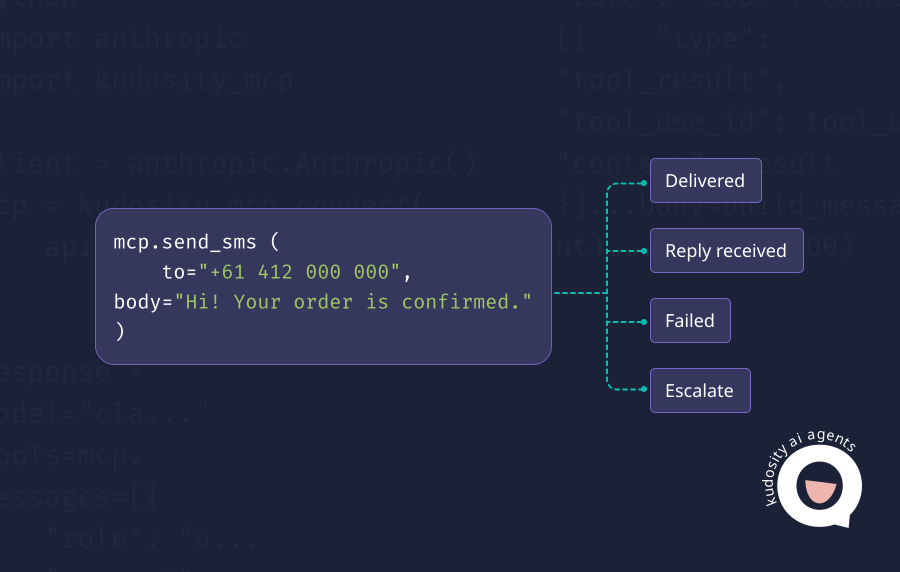
The SMS API sends the message, but the feedback loop is what makes the workflow useful.
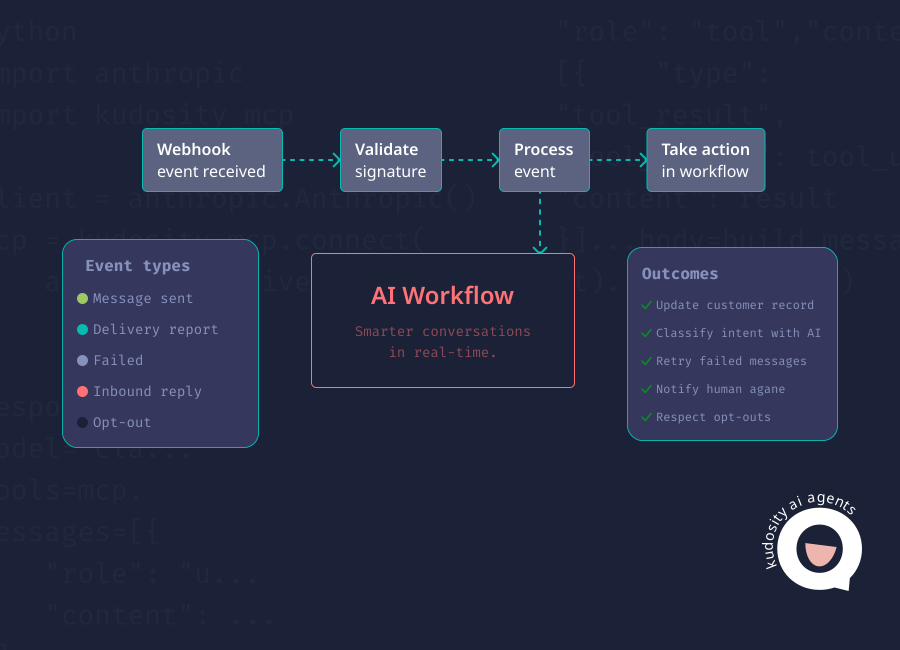
A delivery report tells the system whether the message reached the customer, failed or remained undelivered. An inbound reply gives the agent new context. Intent classification helps decide whether the customer confirmed, rescheduled, objected, asked for help or opted out. The next action then updates the workflow.
Without that loop, the agent is working from assumptions. It may know that it attempted to send a message, but not whether the message landed or what the customer did next.
Features every AI agent SMS API needs
| Feature | Why it matters for AI workflows |
|---|---|
| REST API | Gives the agent or workflow a structured way to trigger messages from approved systems. |
| Webhooks | Push delivery updates, replies and other events back into the workflow in real time. |
| Two-way SMS | Lets customers respond, so the agent can classify intent and decide what happens next. |
| Delivery reports | Show whether messages were delivered, failed, undelivered or are still pending. |
| Error codes | Help the workflow understand why a send failed and whether to retry, suppress or escalate. |
| Opt-out handling | Prevents the agent from continuing to message people who have withdrawn consent. |
| Human handoff | Moves complex, sensitive or low-confidence cases to a person with context attached. |
| Audit logs | Records what the agent sent, why it acted and what happened next. |
These features matter because AI agents increase speed. The API needs to match that speed with visibility, permissions and safeguards.
Best SMS APIs for AI agent workflows
Kudosity
Best for: Australian customer messaging, AI agent SMS workflows and teams that need local support, delivery visibility and compliance controls.
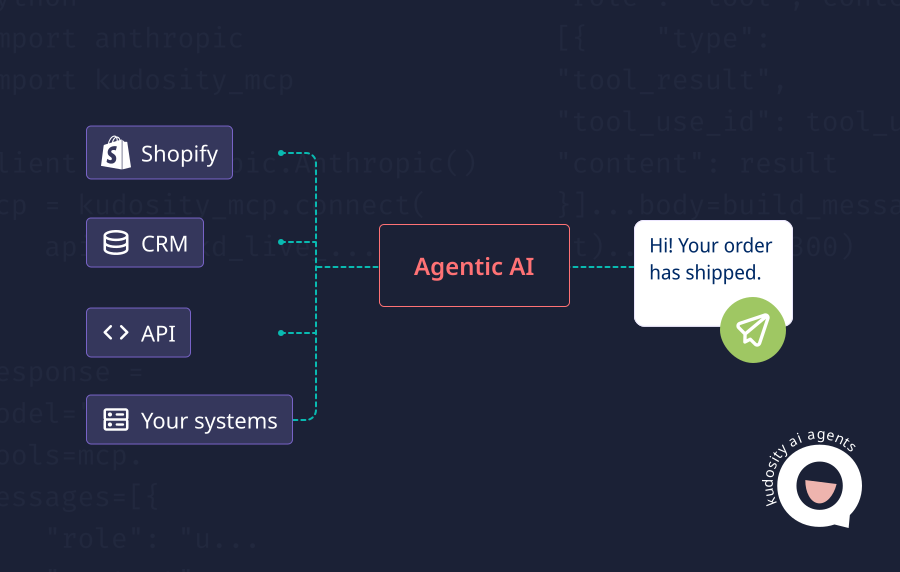
Kudosity positions itself as a messaging action layer for AI agents, allowing AI workflows to turn a decision into an SMS, MMS, WhatsApp or RCS message through a single API call. Its developer documentation also references delivery webhooks, opt-out mechanisms and sender registration as part of AI agent messaging setup.
For Australian businesses, the stronger fit is the operating context around the API:
Customer messaging
Delivery reports
Reply handling
Local support
Direct carrier relationships
Regional compliance (Australian Communications and Media Authority, Infocomm Media Development Authority, International VMN registration
Multi-channel workflows (across SMS, MMS, WhatsApp and RCS).
Kudosity’s Australian SMS gateway materials also reference secure delivery, real-time tracking and direct carrier routes.
Twilio
Best for: Global developer teams and businesses already building inside the Twilio stack.
Twilio has a mature Programmable Messaging API, strong documentation and broad webhook support. Its docs describe incoming message webhooks, outbound status callbacks and message status tracking through the REST API.
Twilio is a practical option when the business needs global programmable communications or already relies on Twilio across multiple channels.
Sinch MessageMedia
Best for: Australian and global teams that want SMS API capability within a broader CPaaS environment.
Sinch Engage describes an SMS API gateway for Australia that supports single and batched messages, sender ID registration, two-way replies and webhooks for delivery reports.
This makes Sinch MessageMedia useful for teams that need established messaging infrastructure, local market capability and enterprise scale.
Infobip
Best for: Enterprise omnichannel workflows and global customer engagement.
Infobip supports SMS delivery reports, inbound messages and event webhooks. Its docs say webhooks can send delivery status, clicks, read receipts and inbound messages to a configured endpoint.
Infobip is often strongest where SMS is one part of a larger omnichannel journey across multiple regions and channels.
Vonage
Best for: Developer-led messaging workflows that need SMS delivery receipts and inbound SMS.
Vonage documentation explains that inbound SMS can be received through webhook endpoints, and that webhooks can send delivery receipts and inbound SMS events back to the business application.
Vonage is useful for teams comfortable building their own messaging logic and workflow handling.
Bird
Best for: Omnichannel teams using Bird’s platform for SMS, email and WhatsApp workflows.
Bird’s documentation describes SMS delivery events such as sms.sent, webhook event delivery and its Channels API for sending and receiving messages across SMS, email and WhatsApp.
Bird is a fit where messaging is part of a broader customer engagement stack rather than a standalone SMS workflow.
ClickSend
Best for: Small to mid-sized teams that want fast SMS API access and accessible developer tools.
ClickSend provides SMS API documentation and inbound SMS access, including message status, delivery text, country, carrier and pricing fields in API examples.
ClickSend can work well when the priority is speed to launch and simple API-based sending.
Telnyx
Best for: API-first teams that want granular messaging events and telecom-focused infrastructure.
Telnyx documentation says its Messaging API can send SMS and MMS, receive inbound messages via webhooks, and notify applications about delivery status updates and errors.
Telnyx is a strong fit for technical teams that want more direct control over telecom APIs and developer tooling.
When Kudosity is a strong fit
Kudosity is a strong fit when the AI agent workflow is customer-facing, Australian and tied to real business messaging outcomes.
That includes use cases such as appointment reminders, delivery updates, payment follow-ups, abandoned cart recovery, customer support triage, lead qualification and post-interaction review requests.
The practical advantage is not only the SMS API. It is the combination of API access, delivery reports, reply handling, webhooks, multi-channel messaging and local Australian support.
For Australian businesses, compliance and sender identity also matter. ACMA guidance states that commercial electronic messages need consent and must include sender identification and a working unsubscribe option. Through the ACMA, the Australian Government has also introduced SMS Sender ID Register requirements for businesses sending branded text messages to Australia.
That matters for AI agents because automated messaging can create risk if consent, opt-outs and sender controls are not built into the workflow. A strong SMS API should make those controls easier to manage, not leave them as manual clean-up.
FAQs
The best SMS API depends on the workflow. For Australian customer messaging, Kudosity is a strong fit because it supports AI agent messaging, SMS API access, delivery webhooks, reply handling, opt-out considerations and multi-channel workflows. Twilio, Infobip and Sinch Engage are also strong options for global or enterprise use cases.
An AI SMS workflow needs a REST API, webhooks, delivery reports, two-way SMS, error codes, opt-out handling, human handoff and audit logs. These features help the agent send messages, understand outcomes and trigger the right next action.
Yes. An AI agent can send SMS when it is connected to an approved SMS API with the right permissions and safeguards. The agent should act through controlled tools rather than open-ended access.
Yes. If the SMS provider supports inbound replies and webhooks, customer replies can be sent back into the workflow. The AI agent can then classify the intent and decide whether to respond, update a record or hand the case to a person.
AI SMS workflows track delivery through delivery reports, status callbacks or webhooks. These events show whether the message was sent, delivered, failed or undelivered, allowing the system to retry, switch channel or escalate where needed.