
Best two-way SMS platforms in Australia for customer support
Customer support does not always need another app, portal or login.
Sometimes the fastest path is a simple reply to an SMS.
For Australian businesses, two-way SMS is useful because it meets customers where they already are: on their phone, in a channel they understand, without asking them to download anything. It is especially useful for support teams handling bookings, reminders, delivery questions, quote follow-ups and urgent service updates.
The best two-way SMS platform is not just the one that can receive replies. It should also help teams manage compliance, sender identity, routing, reporting, security and handoff between automation and people.
What is two-way SMS?
Two-way SMS lets businesses send messages that customers can reply to.
A one-way SMS might say, “Your appointment is tomorrow at 10am.” A two-way SMS lets the customer respond with “Confirm”, “Need to reschedule” or “Running late”.
That makes it useful for:
support enquiries
booking changes
appointment reminders
delivery questions
payment follow-ups
review requests
customer feedback
Two-way SMS usually relies on a dedicated number, virtual mobile number, long code or other sender setup that can receive inbound replies. The platform then routes those replies into a dashboard, API, webhook, CRM or support workflow.
Why two-way SMS matters for customer support
Two-way SMS matters because it reduces friction.
Customers do not need to wait on hold, find an email thread or log into a portal. They can reply from the same message they received. For support teams, that can make simple issues easier to resolve and help urgent replies surface faster.
It also gives businesses more useful signals. A reply can tell the team whether someone wants to confirm, cancel, escalate, pay, reschedule or ask a question.
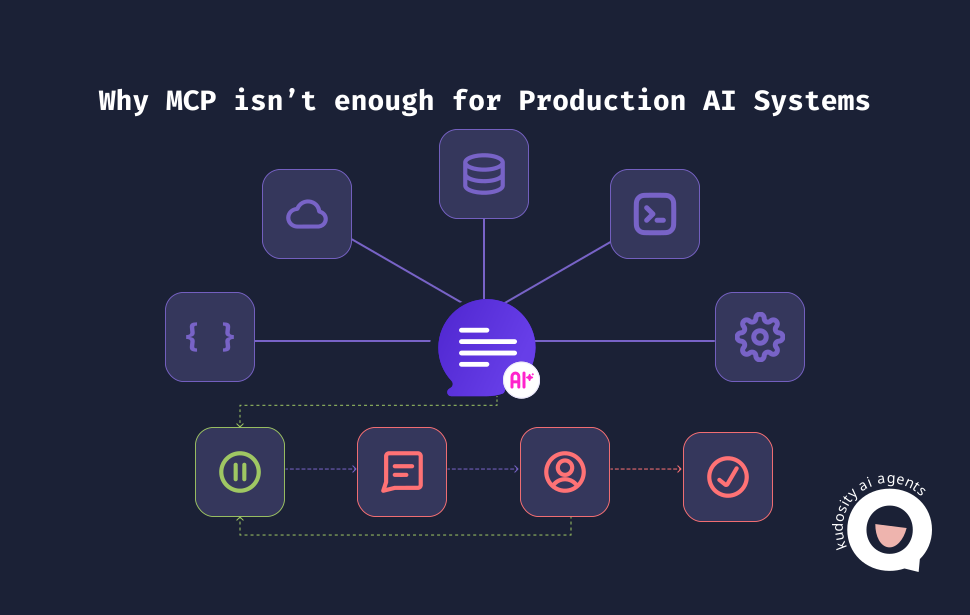
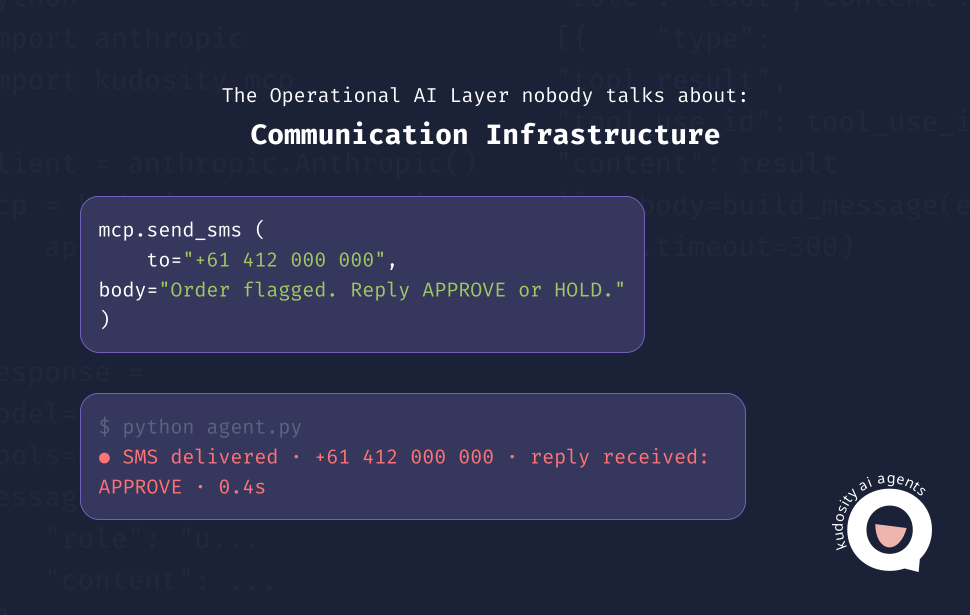
AI agents can add another layer of control. They can classify replies, identify intent, route simple requests to automation and escalate complex or sensitive cases to a person. That works best when the messaging platform supports reply capture, conversation history, webhooks and human handoff.
Compliance still matters. In Australia, ACMA says commercial electronic messages must have consent, identify the sender, include contact details and make it easy to unsubscribe. That means customer support workflows need opt-out handling and sender controls built in, not added later.
Features to look for
| Feature | Why it matters for support teams |
|---|---|
| Inbound SMS | Lets customers reply to business messages instead of starting a new support process. |
| Webhooks | Sends replies and delivery events into your CRM, helpdesk or internal workflow in real time. |
| Conversation history | Gives agents context before responding, reducing repeated questions and handoff friction. |
| AI classification | Helps identify reply intent, such as reschedule, complaint, payment question or urgent issue. |
| Human handoff | Allows complex or sensitive cases to move from automation to a support agent. |
| Opt-out handling | Supports Australian compliance expectations and reduces the risk of messaging people who have unsubscribed. |
| Reporting | Helps teams track delivery, response rates, resolution activity and support workload. |
For customer support, the strongest platforms are the ones that connect inbound replies to the systems your team already uses.
Best two-way SMS platforms in Australia
Kudosity
Best for: Australian businesses that need secure, compliant two-way SMS with local support and sender ID guidance.
Kudosity is a strong fit for Australian customer support workflows where compliance, security and delivery confidence matter. The platform supports two-way messaging through virtual mobile numbers, long codes or toll-free numbers where available, and its Australian messaging materials reference virtual mobile numbers for replies and conversational flows.
Its compliance angle is important. Kudosity is an authorised ACMA Sender ID Agent and says it handles sender ID registration end to end, with compliance support and monitoring. Its own compliance guidance also references automatic opt-out handling, consent tracking, audit logs, ISO 27001, SOC 2 Type II and Australian data sovereignty.
For support teams, that makes Kudosity a practical option when two-way SMS is not just a convenience feature, but part of a governed customer communication workflow.
Sinch MessageMedia
Best for: Established Australian messaging teams using Sinch MessageMedia or broader Sinch services.
Sinch MessageMedia positions itself as a business messaging platform for Australian customers, with SMS, social messaging and integrations. Its support documentation says the MessageMedia Messages API includes endpoints for building two-way messaging applications across SMS, MMS and text to voice.
This makes it a solid option for teams already working in the Sinch MessageMedia environment or looking for a broad business messaging platform with established local presence.
ClickSend
Best for: Small to mid-sized businesses that want quick two-way texting from a dashboard.
ClickSend’s two-way SMS product focuses on simple customer conversations, auto-responders, templates and conversation management from a dashboard.
It is a practical fit for teams that want fast setup and do not need a heavily customised support workflow.
Twilio
Best for: Developer-led teams with existing Twilio infrastructure.
Twilio supports two-way SMS in Australia and provides messaging webhooks for incoming messages and outbound status callbacks.
Twilio is strongest for technical teams that want to build custom SMS support workflows through APIs, especially if they already use Twilio across other communications products.
Burst SMS or MTMO
Best for: Wholesale, gateway and programmable SMS use cases across Australia and New Zealand.
MTMO says Burst SMS Wholesale and MTMO have united under the MTMO brand, with carrier-direct connections across Australia and New Zealand, plus two-way SMS through SMPP or SMS API.
This makes it better suited to technical, wholesale or gateway-led messaging needs than lightweight support teams looking for simple conversational tooling.
Infobip
Best for: Enterprise omnichannel support and global customer engagement.
Infobip supports two-way SMS through inbound SMS, webhooks, API pull, SMPP forwarding and other routing options. It also supports broader omnichannel messaging, which makes it a strong option for enterprise teams managing customer journeys across SMS and other channels.
Customer support workflows
Two-way SMS works best when it is tied to a clear support workflow.
Common examples include:
appointment changes
delivery questions
quote follow-up
payment reminders
review requests
support triage
A business sends an appointment reminder. The customer replies, “Can I move this to Friday?” The SMS platform captures the reply and sends it into the workflow. An AI agent classifies the intent as reschedule request. If the change is simple, automation can suggest the next available time. If the request is complex, the conversation is handed to a support agent with the full message history attached.
That is where two-way SMS becomes more than a reply channel. It becomes part of the support operating model.
Why Kudosity is a strong choice for Australian support teams
Kudosity is strongest where Australian support teams need two-way SMS with proper governance around the edges.
That includes:
ACMA sender ID registration support
opt-out handling and consent visibility
ISO 27001 and SOC 2 Type II credentials
Australian data sovereignty
two-way messaging through virtual mobile numbers
delivery reporting and local support
conversational AI and human handoff use cases
For customer support, this matters because every reply is part of a customer record, a compliance trail and an operational workflow. A platform should make that easier to manage, not harder.
Explore the Kudosity developer portal
Integrate SMS and MMS into your applications with our flexible API. Our REST SMS API allows seamless integration of SMS capabilities into your applications, whether you're launching a new app or enhancing an existing one.

FAQs
For Australian businesses that need secure, compliant two-way SMS with local compliance support, Kudosity is a strong choice. For global developer teams, Twilio may be a better fit. For enterprise omnichannel programs, Infobip is worth considering.
Yes. If the platform supports inbound SMS through a dedicated number, virtual mobile number or similar sender setup, customers can reply to automated SMS messages and those replies can be routed into a dashboard, API or support workflow.
Yes, when the workflow is configured properly. AI agents can classify replies, detect intent, suggest responses and escalate complex cases to people. The platform still needs guardrails for consent, opt-outs, logging and human handoff.
Most platforms track replies through inbound numbers, APIs and webhooks. A webhook can send the reply into a CRM, support desk or internal system so the business can process it in real time.
One-way SMS only sends messages out. Two-way SMS allows customers to reply, which makes it more useful for support, bookings, reminders, delivery updates and customer follow-up.
Get ready for Australia’s SMS Sender ID Registry
From July 2026, Sender ID registration will be required. ACMA’s final steps are still in progress, but Kudosity will keep you informed and help you be ready when registration opens.
:quality(80))
:quality(80))
:quality(80))
:quality(80))