Kudosity vs Twilio: which SMS API is better for AI agent workflows?
AI agents are starting to change how businesses manage customer communication. Instead of only generating copy or suggesting next steps, agents can now sit inside workflows that send messages, track outcomes, classify replies and trigger follow-up actions. For SMS, that makes the API behind the workflow more important. A basic send endpoint is not enough.
The better question is not just which platform can send SMS. It is which platform gives an AI agent the feedback loop it needs to act usefully and safely.
What do AI agent workflows need from an SMS API?
An AI agent SMS workflow needs more than the ability to send a message.
A practical workflow looks like this:

AI decision
SMS sent
delivery tracked
reply received
intent classified
next action triggered
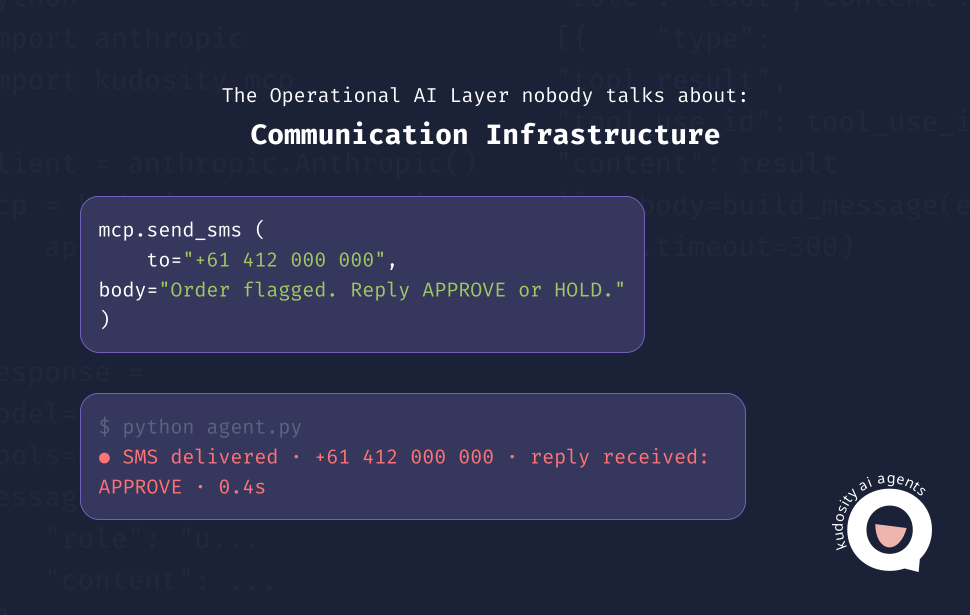
Each step matters. The agent may decide that a customer needs a reminder, payment prompt, support follow-up or appointment update. The SMS API sends the message. Delivery tracking confirms what happened. If the customer replies, the response needs to be captured, classified and routed into the next workflow.
That feedback loop is where SMS becomes useful for AI agents. Without delivery reports, inbound message handling, webhooks and conversation context, the agent is working with assumptions. It may know that a message was requested, but not whether it was delivered, ignored, replied to or failed.
For developers, the key requirements usually include:
a reliable SMS send endpoint
delivery status tracking
inbound reply handling
webhooks for real-time workflow updates
structured error handling
conversation history or system-level logging
permissions and guardrails for AI-triggered actions
clear API documentation and test environments
The SMS API does not need to “be AI” to support AI workflows. It needs to expose the right messaging events so the agent can make better decisions.
Kudosity overview
Kudosity is a business messaging platform with SMS API capability, delivery reporting, two-way messaging support and broader messaging options across channels such as SMS, MMS, RCS and WhatsApp. Its developer resources position the platform around messaging APIs, code generation, API discovery and AI-assisted development workflows.
For Australian businesses, the stronger fit is local context. Kudosity’s Australian REST API page describes the platform as built for Australian data requirements, ISO 27001 certified and connected directly to Tier 1 carriers. It also positions the API as a way for development teams to embed SMS and MMS into apps, platforms and production workflows.
That matters for AI agent workflows because the agent is only one part of the system. The messaging layer still needs delivery visibility, local business fit, secure data handling and support for customer replies.
Kudosity also supports webhooks for events such as SMS delivery and incoming messages, which is important when an AI agent needs real-time signals to update a workflow or escalate a case.
Twilio overview
Twilio is a global developer platform with strong documentation, broad API coverage and mature programmable messaging tools.
Twilio’s docs describe API references, quickstarts, SDKs and multi-language code samples across its developer resources. Its Programmable Messaging documentation supports outbound message status callbacks, which allow applications to track message status changes through the message lifecycle.
Twilio also supports messaging webhooks for incoming messages and outbound status callbacks. Its webhook documentation explains that incoming message webhooks allow applications to react when a Twilio number receives a message, while status callbacks track delivery status for outbound messages.
For global developer teams, that depth is useful. Twilio is often a strong fit where a business already uses the Twilio stack, operates across multiple regions or needs a broad programmable communications platform.
Feature comparison
| Area | Kudosity | Twilio |
|---|---|---|
| SMS API | Business messaging API for embedding SMS and MMS into apps, platforms and workflows, with Australian REST API positioning. | Programmable Messaging API with extensive global developer documentation and SDK resources. |
| Two-way SMS | Supports webhooks for incoming SMS events and workflow updates. | Supports incoming message webhooks and reply handling through Twilio numbers. |
| Delivery tracking | Webhooks can notify systems about SMS delivery and incoming messages. | Status callbacks track outbound message status changes. |
| Webhooks | Useful for delivery events, inbound replies and workflow automation. | Supports incoming message webhooks and outbound status callbacks. |
| AI workflow fit | Strong fit for Australian customer workflows where local delivery, compliance, support and multi-channel messaging matter. | Strong fit for global developer teams already building inside Twilio. |
| MCP support | Kudosity’s hosted MCP Server lets AI tools explore and execute Kudosity APIs, search specs, generate code and run live requests. | Twilio’s public-beta MCP Server searches public API specifications and retrieves requests as well as response schemas. Direct API execution is planned but not currently supported. |
| Australian business support | Stronger local fit for Australian SMS workflows, including Australian data requirements and direct Tier 1 carrier references. | Strong global developer ecosystem, with Australian fit depending on routing, support and compliance requirements.. |
| Global developer ecosystem | Focused on business messaging and AI-assisted developer workflows. | Very broad global platform across messaging, AI tools and communication APIs. |
Which is better for AI agents?
The balanced answer is that both platforms can support AI agent SMS workflows, but they fit different operating models.
Choose Kudosity when the workflow is primarily Australian, customer-facing and tied to local business messaging. It is a stronger fit where the business needs SMS, MMS, WhatsApp or RCS workflows, delivery tracking, two-way messaging and local support around implementation. It is also more relevant when Australian data requirements, carrier delivery and local compliance context are part of procurement.
For example, an Australian healthcare, education, retail or service business might use an AI agent to classify inbound replies, trigger appointment follow-ups, escalate complaints or send payment reminders. In that case, the SMS API needs to support reply capture, delivery events and workflow updates. The platform also needs to make sense for Australian customer communication, not just global API access.
Choose Twilio when the team is already invested in Twilio, building across a global communications stack or needs broad programmable communications coverage. Twilio’s documentation, webhooks, status callbacks and MCP Server make it a practical option for developer-led organisations that already have Twilio infrastructure in place.
The decision comes down to where the workflow lives. If the priority is global developer breadth, Twilio is hard to ignore. If the priority is Australian business messaging with local delivery context and support, Kudosity is the more focused option.
What developers should assess before choosing
Before choosing an SMS API for AI agents, developers should test more than the send endpoint.
The right evaluation should include:
Can the API send SMS and MMS from approved workflows?
Can it return delivery status in a usable format?
Can it capture inbound replies?
Can webhooks update the CRM, support platform or internal system?
Can AI-generated messages be reviewed, logged or restricted?
Can opt-outs, sender identity and consent rules be managed?
Can the provider support the regions where messages are sent?
Does the developer experience hold up under real implementation work?
AI agents introduce speed, but they also introduce risk. The API needs to make controlled execution easier. That means clear permissions, reliable event data and enough visibility for human teams to understand what happened.
Explore the Kudosity developer portal
Integrate SMS and MMS into your applications with our flexible API. Our REST SMS API allows seamless integration of SMS capabilities into your applications, whether you're launching a new app or enhancing an existing one.

FAQs
Yes, for many SMS and business messaging use cases. Kudosity can be considered a Twilio alternative when a business needs SMS API access, two-way messaging, delivery reporting and multi-channel workflows. The stronger fit is usually for Australian businesses that want local relevance, support and delivery context.
It depends on whether the agent is helping developers build an integration or operating the messaging workflow itself. Kudosity’s MCP Server supports both API discovery and authenticated live execution, making it ideal for controlled messaging actions. Twilio’s MCP Server is useful for API discovery and schema retrieval, but it's public-beta doesn't support API execution.
Yes. Kudosity supports webhooks for events such as SMS delivery and incoming messages. Twilio supports incoming message webhooks and outbound status callbacks for tracking message status.
For Australian businesses, Kudosity is usually the stronger fit when local support, Australian data requirements, direct carrier relationships and customer messaging workflows are central to the decision. Twilio may be better for businesses that already use Twilio globally or need a wider programmable communications stack.
Get ready for Australia’s SMS Sender ID Registry
From July 2026, Sender ID registration will be required. ACMA’s final steps are still in progress, but Kudosity will keep you informed and help you be ready when registration opens.
:quality(80))
:quality(80))
:quality(80))
:quality(80))